Robin Transportation Systems Inc.
Break Bulk Shipping from Canada
Break Bulk Shipping
Non-Containerized Ocean Cargo to Canadian Ports
Steel, machinery, lumber, wind energy, and project cargo. Great Lakes and Seaway expertise. Licensed customs broker partner. Quotes within 15 minutes.
Break Bulk Services
Steel, machinery, lumber, wind energy: if it doesn't fit in a container, we move it by specialist vessel to Canadian ports.
What Is Break Bulk?
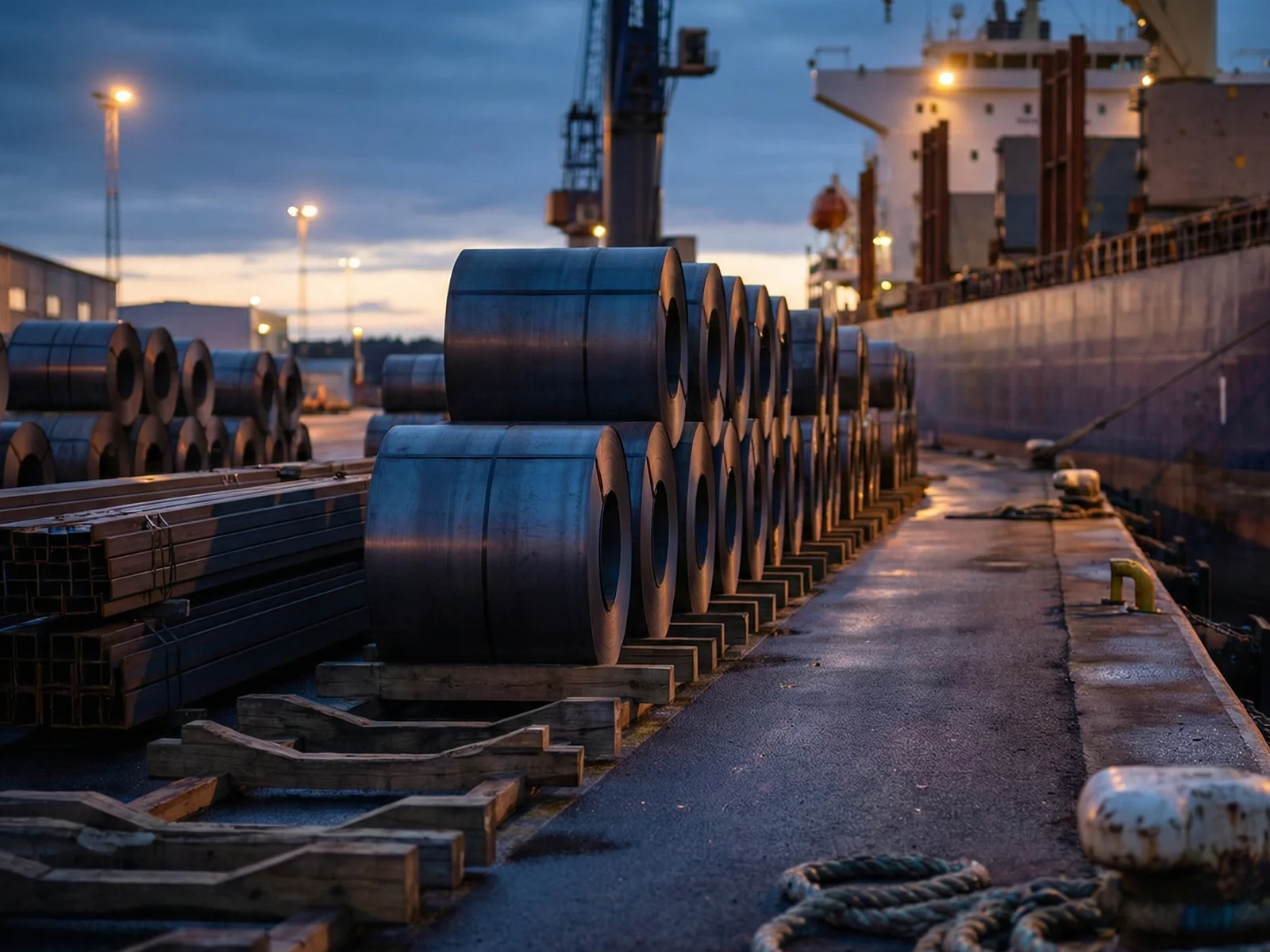
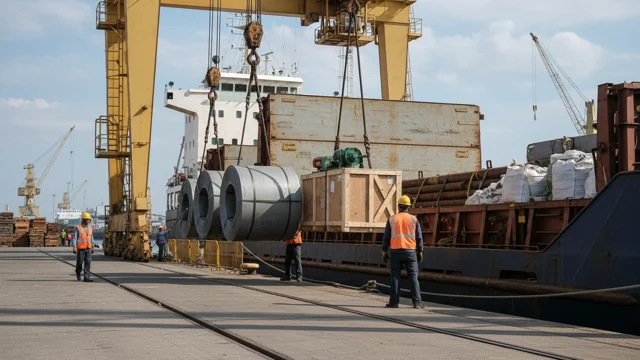
Break bulk is the ocean transport of individual cargo pieces, loaded onto a vessel by crane rather than packed into standard shipping containers. It is the oldest form of ocean freight and remains essential for cargo that is too large, too heavy, or too irregular to containerize.
Containerized
Cargo in 20' or 40' ISO containers (FCL/LCL)
Break Bulk
Individual pieces loaded by crane onto MPV vessels
Project Cargo
High-value, one-time industrial freight tied to a project
Dry Bulk
Loose, unpackaged commodities by conveyor or grab
RTSI coordinates the break bulk process: origin pickup, vessel booking, stowage planning, ocean transit, port discharge, customs clearance support, and final delivery.
For standard containerized ocean freight (FCL/LCL), see our Ocean Freight page.
Cargo Types
From 5-tonne steel coils to 400-tonne nacelles: if it doesn't fit in a container, we move it.
Steel Products
Coils (HRC/CRC), plates, beams, rebar, pipes, wire rod
5-30 t per piece
Machinery & Equipment
Generators, compressors, mining equipment, construction equipment
10-500+ t per unit
Forest Products
Lumber bundles, wood pulp bales, paper rolls, plywood
1-5 t per bundle
Wind Energy
Turbine blades (up to 153 m), nacelles, tower sections
20-400+ t per piece
Vehicles
Buses, trucks, agricultural equipment, construction vehicles
5-80 t per unit
Crated Equipment
Electrical panels, transformers, turbine components
1-200+ t per crate
Pipes & Tubes
Pipeline sections, water mains, structural hollow sections
0.5-10 t per bundle
Bagged & Drummed
Cement, fertilizer, chemicals, resins, food-grade liquids
25-300 kg per unit
Break Bulk vs Containerized
Not sure which method suits your cargo? Here's how to decide.
Dimensions
Weight
Shape
Cost
The Middle Ground: Flat Racks & Open Tops
For cargo that is oversized but not massive, flat rack and open-top containers offer a hybrid solution, accommodating up to 40-55 tonnes on a 40' flat rack, or over-height cargo via open tops.
RTSI advises on the optimal mode for each piece. Many shipments use a combination: standard pieces in containers, oversized pieces on flat racks or break bulk vessels. RTSI coordinates the freight plan, shipping documents, licensed broker communication, and release timing so each piece is reviewed before arrival.
Wind Energy Logistics
Wind energy is the fastest-growing cargo segment for break bulk shipping globally. Canada's offshore wind ambitions, particularly in Atlantic Canada, will drive significant demand for heavy lift vessel capacity.
Onshore Blade
60-80 m | 15-30 t
Offshore Blade
80-153 m | 30-54 t
Nacelle
10-20 m long | 100-400+ t
Tower Section
4-5 m x 20-30 m | 40-80 t
At least 15 heavy transports are required for the main components of a single turbine installation. RTSI coordinates multi-vessel, multi-port projects for wind energy developers.
For coordinated multi-leg project logistics, see our Project Cargo service.
Vessel Types & Crane Capacities
Different cargo requires different vessels. We select the right ship for your shipment.

Multi-Purpose Vessel (MPV)
General break bulk, steel, forest products
Heavy Lift Vessel
Transformers, modules, wind components
Tweendecker
Bagged goods, drums, mixed cargo
Open Hatch Bulk Carrier
Lumber, pulp, paper (neo-bulk)
Ro-Ro (Roll-On/Roll-Off)
Vehicles, wheeled/tracked equipment
Semi-Submersible
Offshore structures, barges, rigs
Key Carriers We Book With
BBC Chartering
140+ MPV/heavy lift vessels. New LakerMax series designed for St. Lawrence Seaway transit. Up to 500 mt lift.
Fednav (FALLine)
Up to 60 sailings/year from North Europe to Great Lakes ports. Steel, project cargo, breakbulk general cargo.
Desagnes
21 vessels for Eastern Canada and Arctic. Crane capacity up to 500 mt tandem. Purpose-built for Canadian waters.
Ports & Waterways
Every major break bulk port in Canada, plus Great Lakes access via the St. Lawrence Seaway. We know the terminals, equipment, and how to get freight from dock to door.

Canadian Ports
Hamilton (HOPA)
Steel (47.5% of cargo), project cargo
Ontario's largest port; 11.46 MT (2024); new $10M steel transload facility
Montreal
Break bulk, project cargo, dry bulk
~197,000 t non-containerized (2024); heavy lift at Laurier Terminals
Halifax
Steel, project cargo, offshore wind
Non-containerized up 20% in 2024; deep-water berths for largest vessels
Vancouver
Forest products, steel, machinery
158 MT record (2024); Lynnterm breakbulk consolidation centre
Thunder Bay
Forest products, steel, project cargo
10+ MT (2024); new laydown areas at Keefer Terminal
Trois-Rivières
Steel, aluminum, wind energy, forest
3.5 MT (2024); major expansion underway
Saint John (NB)
Wind energy, project cargo, pulp, steel
Atlantic Canada's largest by tonnage; 3 Class I rail lines
Sorel
Steel, general cargo
FALLine discharge port; St. Lawrence access
Great Lakes & St. Lawrence Seaway
The Seaway connects the Atlantic to the heart of North America: 3,700 km of navigable waterway serving ports from Montreal to Thunder Bay and Duluth. Break bulk cargo moves through the Seaway to reach Ontario's industrial heartland directly by water.
3,700 km
Total Distance
37 MT
2024 Cargo
+14% YoY
General Cargo Growth
~295 days
Season Length
Seawaymax Vessel Limits
Length
225.5 m (740 ft)
Lock chambers are 233.5 m
Beam
23.77 m (78 ft)
Lock width is 24.4 m
Draft
8.08 m (26 ft 6 in)
8.15 m with DIS technology
Air Draft
35.5 m (116.5 ft)
Height to clear bridges
Seasonal note: Seasonal note: The Seaway typically operates from late March to late December/early January. Break bulk shipments to Great Lakes ports (Hamilton, Thunder Bay) must be planned around the navigation season. East Coast ports (Montreal, Halifax, Saint John) operate year-round.
Customs & Liner Terms
Customs clearance coordination for break bulk imports and a clear view of port cargo-handling costs.

Customs Clearance
Break bulk imports are more complex than containerized freight. Each piece may have different HS codes, tariff rates, and permit requirements. RTSI coordinates the documentation and licensed broker workflow.
ACI/eManifest Reporting
Pre-arrival data filed with CBSA before the vessel reaches port.
CARM Portal Compliance
All duties and taxes paid through the CARM client portal.
Tariff Classification
Correct HS codes for each piece, critical for steel subject to safeguard quotas.
Origin Determination
CUSMA eligibility assessment to minimize duties on qualifying goods.
Steel Import Quotas
Canada caps non-FTA steel at 50% of 2024 levels. We monitor quota availability.
OGD Coordination
Permits from CFIA, Health Canada, NRCan, or other agencies as required.
Shipping and customs support coordinated through one RTSI contact. RTSI coordinates vessel booking, documentation, broker communication, and delivery timing so details are aligned before cargo arrives.
For complete customs support coordination details, see our Customs Support page.
Liner Terms
Liner terms define who pays for loading, discharging, and stowage -- a critical cost factor in break bulk that does not exist in standard container shipping.
When you receive a break bulk freight quote, check the terms. An FIO quote may look cheaper than Liner Terms, but you'll need to add stevedoring costs at both ports.
Gross (Liner)
FI (Free In)
FO (Free Out)
FIO (Free In/Out)
FIOS (Free In/Out/Stowed)
FIOST (Free In/Out/Stowed/Trimmed)
How Break Bulk Shipping Works
Request a Quote
Call, email, or use the form. Provide cargo dimensions, weight, origin, and destination. We respond within 15 minutes.
Shipping Plan
We recommend the optimal mode: break bulk vessel, flat rack, Ro-Ro, or combination. We select carriers and advise on liner terms.
Documentation & Booking
All shipping documents prepared, pre-shipment survey coordinated if needed, vessel space confirmed.
Loading & Transit
Cargo loaded and stowed per IMO CSS Code. We track throughout transit and provide status updates.
Customs Clearance
RTSI coordinates CBSA documentation, tariff classification support, quota review, and release timing with the licensed customs broker partner.
Discharge & Delivery
Stevedoring coordinated at the discharge port, then drayage or trucking to your door.
Frequently Asked Questions
Common questions about non-containerized ocean freight.